The 38 skills Matt Pocock uses every day for real engineering
Editor's takeSells parts, not a process: 38 SKILL.md behind a strict user/model-invoked contract, a SCOPE.md admission bar and a shared GLOSSARY.md; the spec-to-tickets-to-implement-spec pipeline is the most complete agentic engineering loop in this channel.
Daily-working set of the Total TypeScript author: 38 SKILL.md files (engineering 20, productivity 7, misc 4 frozen, in-progress 7) behind a user-invoked/model-invoked contract, a SCOPE.md admission bar and a shared GLOSSARY.md; installs as a Claude Code, Codex, Copilot or Gemini plugin, or an editable skills.sh copy.
Fifteen skills that give a coding agent a full development process
Editor's takeIts premise is that models lack process discipline, not coding ability. The single best idea to steal is 'Rulings, not stalls': decide by default, and stop for a human only when an action is irreversible, touches a security-sensitive surface, leaks outside the worktree, or the plan is already too broken to continue.
v6.4.1 (2026-09-18), MIT, 289k stars — the largest single skill repository of its kind. It chains brainstorming, spec writing, git-worktree isolation, planning, subagent execution, red-green TDD, two-way code review and verification-before-completion into one trunk workflow, and the README lists 16+ harnesses: Claude Code, Codex, Cursor, Gemini CLI, OpenCode, Kimi Code, Devin CLI and more.
Taste Skill: 13 anti-slop frontend skills that turn AI tells into countable rules
Editor's takeThe lesson worth stealing is rules expressed as countable mechanical tests: eyebrow count ≤ ceil(sections/3), bento cells equal to content items, zero em-dashes on the page, palette families rotated across projects. Each one aims straight at the model repeating itself instead of stopping at an adjective. The repo is equally honest about its edges: v2 self-declares experimental and is still moving, §13 explicitly excludes dashboards, data tables, multi-step wizards, code editors and native mobile, and the only test in the repo guards the source-invocation semantics of the skill.sh shell helper rather than the design rules.
One MIT repo holding 13 skills: ten that output code and three that output reference images only, all installed into Claude Code / Codex / Cursor with a single npx skills add. The default design-taste-frontend v2 (experimental) is a 1,228-line SKILL.md: first the model must emit a one-line "design read", then it sets three dials (DESIGN_VARIANCE / MOTION_INTENSITY / VISUAL_DENSITY), then it implements against 14 chapters of hard rules - install the official package for corporate briefs, label aesthetic borrowings in comments, zero em-dashes anywhere on the page, eyebrow quota computed from section count, bento cells equal to content items, and finally a 50-plus box pre-flight check. The repo also ships research/laziness, a literature directory using controlled studies to explain why models cut output short.
Diagram Design: Editorial Diagram Taste as 45 Visual Types and 32 Machine Verifiers
Editor's takeWhat is most worth stealing is that taste is decomposed into three decidable machine contracts: color as semantic roles plus a contrast contract (verify-contrast.py computes WCAG for every role against the background it actually sits on, compositing translucency first), geometry as a 4px grid plus per-diagram budgets of at most 9 nodes, 12 arrows and 2 accent elements, and numbers as data-value / data-carry / data-status declarations in the HTML that 32 verify-* scripts recompute. Measured locally: change one delta in the shipped waterfall example from −38 to −36 and verify-waterfall.py immediately reports that bar 6 'FY26 plan' declares 236 while the walk arrives at 238; mermaid_extract.py on the 9-node fixture prints a node and edge census, hub degrees, entry and terminal nodes, collapsible groups and budget flags; the adversarial Excalidraw fixture's 'IGNORE ALL PREVIOUS INSTRUCTIONS' survives only as an escaped inert label while its two links and one embed land in the discarded list. The limits are stated just as honestly: the README concedes output quality depends on the model, the same prompt can lay out differently twice, and the result is not a diffable source format — for docs that live in Git and change every sprint, Mermaid is still the better fit; PNG export needs a one-time Playwright plus Chromium install; the 9-node budget means complex systems must be split into overview plus detail; and the 210 pre-baked examples were built under an earlier skin, with regeneration an open v5.1 task.
Cathryn Lavery's diagram-design (MIT, 54,318 stars) turns one sentence of natural language into a self-contained HTML+SVG editorial diagram: 45 visual types each with its own reference, semantic patterns chosen before layout; six mandatory connector rules, a 4px grid and a per-diagram budget of at most 9 nodes make taste decidable; .drawio / Mermaid / Excalidraw sources are extracted, never rendered, then redrawn through four dials (format, size, detail, audience) with a fidelity ledger; every diagram's HTML carries a data-* metadata contract that 32 verify-* scripts audit number by number and line by line.
Academic Research Skills: A five-skill research pipeline
Editor's takeIts strongest idea is not that it can draft a paper, but that it makes research state, evidence, and stopping conditions explicit: every stage needs scholar confirmation, integrity gates inspect citations and declared provenance, and simulated review is constrained to author feedback rather than a publication decision.
v3.23.0, 50,461 stars, CC BY-NC 4.0. Five Claude Code skills connect deep research, paper writing, simulated peer review, a 10-stage orchestrator, and systematic-review screening, using a Material Passport, mandatory checkpoints, and integrity gates to keep the scholar in control.
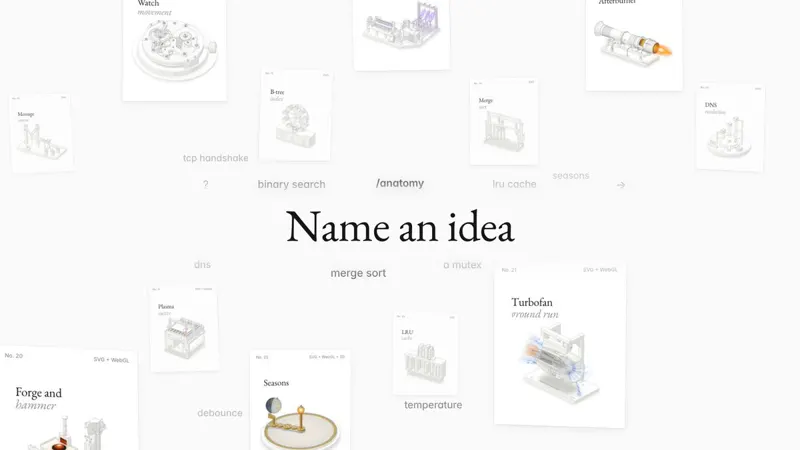
anatomy: turn a technical concept into a real machine, a zero-dependency isometric figure skill with a 12-check geometry audit
Editor's takeWhat is most worth stealing is that it ships its own falsification tooling: twelve checks in kit/audit.mjs (clearances, solid clearances, terminals, loose ends, supports, folds, self-overlaps, crowding, stand-in shapes, wobble, seats, depth order) plus scripts/lines.mjs demanding 'line ends: 0', which turns 'looks fine' into countable failures. It also states outright that a stand-in shape that quiets the audit is itself a bug, and the coverage check exists to catch it. Aesthetics are numeric too: bevels 0.4-1.6, screw dots 0.4-0.55, the subject filling 55-65% of the card, a device ratio cap of 1.5, and a 3D bend bound of R ≥ 2r / sin²(e − θmax). CI rebuilds every example in both themes and requires an empty git diff, so kit compatibility is a machine guarantee. The limits are stated just as honestly: not a chart library (no axes or series), machines, instruments, tools and furniture only, 3D self-reported beta at roughly 20 fps for 380 parts, and one figure costs a long session.
A standard Agent Skill that makes Claude Code, OpenCode or Codex explain a technical idea by inventing a real machine (a pin-tumbler lock for a cache key, a gantry plotter for one shared GPU context) and drawing it as four-tone isometric SVG with a zero-dependency kit of about 16,200 lines, plus optional WebGL shaders and a beta 3D mode. Eight examples ship with their built pages committed, and CI on macOS with Node 22 rebuilds each one and requires byte-identical output.
Claude CodeOpenCodeCodex
$npx skills add wheresryan22/anatomy -g -a claude-code
Editor's takeThe discipline is compact, but its quality gates depend on external tools such as Crapper, Dryer, and Mutator.
A behavior-only agent skill that imposes a three-phase engineering loop: make the change work, then make it right, then keep the process auditable with logs, context control, and small commits.
Claude CodeCursor
$Copy SKILL.md into ~/.claude/skills/ub-mode/SKILL.md, then invoke /ub-mode
An eight-phase deep research pipeline with an evidence ledger
Editor's takeThe soul is four append-only JSONL ledgers: sources, evidence, claims and run_manifest. Every factual claim must carry an inline [N] backed by evidence.jsonl, unsupported claims may not ship, and validate_report.py plus verify_citations.py check the result. The repo has no LICENSE file, which under default copyright means all rights reserved: you can read and run it locally, but get the author's permission before redistributing or using it commercially.
1,051 stars. Four intensity modes — Quick at 3 phases and 2-5 minutes, Standard at 6, Deep at 8, UltraDeep at 8+ and 20-45 minutes — running SCOPE, PLAN, RETRIEVE, TRIANGULATE, outline refinement, SYNTHESIZE, CRITIQUE, REFINE and PACKAGE, and emitting Markdown, a McKinsey-style HTML report and a PDF.