Skip to content
← Tags
How to Build a Humanoid Robot: A Seven-Layer Constraint Chain from Joint Modules to Sim-to-Real

How to Build a Humanoid Robot: A Seven-Layer Constraint Chain from Joint Modules to Sim-to-Real

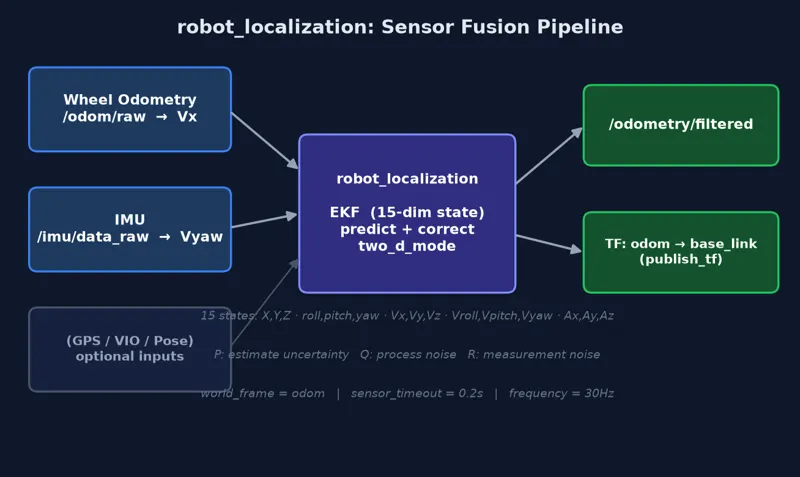
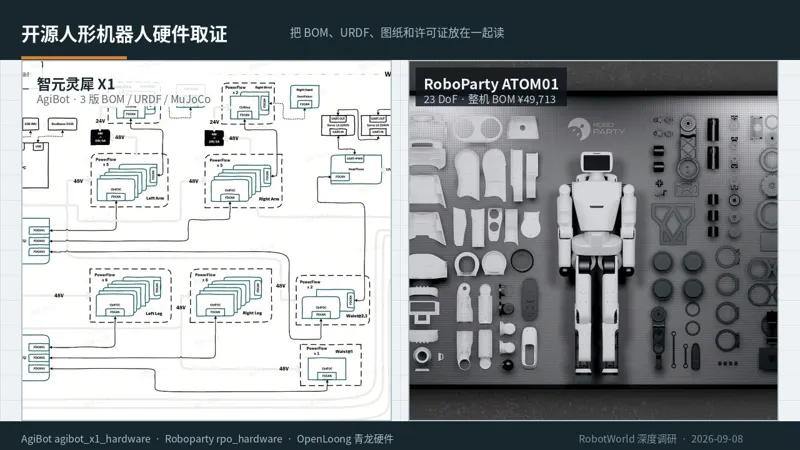
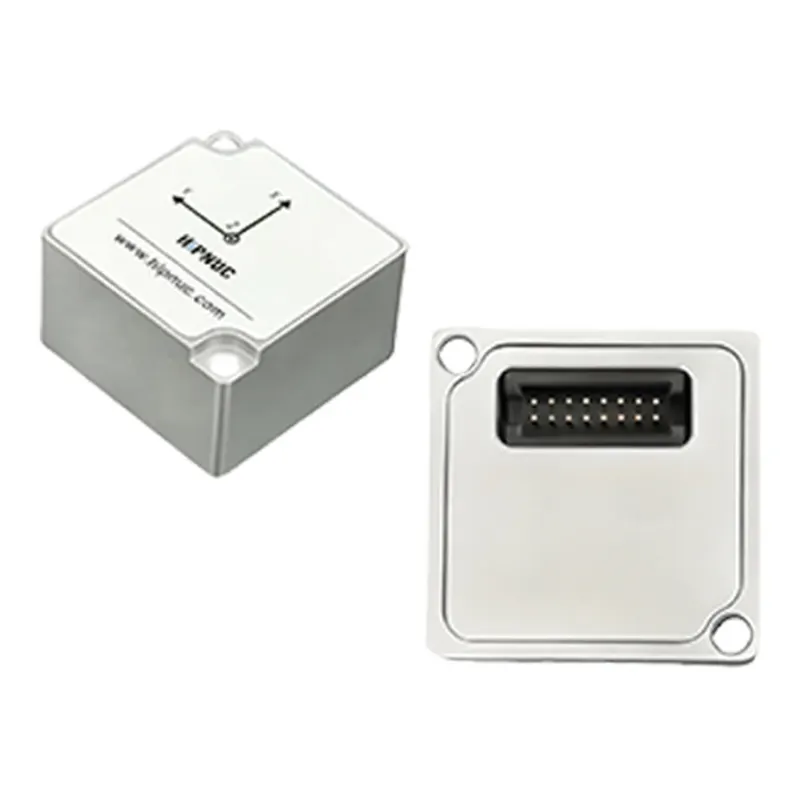
A humanoid robot is not an assembly of seven modules but a stack of physics equations that set each other's boundary conditions. This article computes the whole-machine stack layer by layer: joint motor modules (declared torque versus real quasi-static CoP demand — knee margins across three vendors converge to 2.23-2.42x while BHL's knee has only 1.51x) -> IMU (lever-arm pseudo-acceleration is 21,752x the sensor noise floor, so mounting position matters four orders of magnitude more than the datasheet) -> materials and structure (three BOM revisions of AgiBot's X1 as a load-path history: every part entering the closed-chain drivetrain upgraded to 7075-T6 / TC4 / 17-4PH) -> sensors (fix the observation space before the shopping list) -> battery and BMS ('all joints at peak simultaneously' is physically impossible: G1's 46,062 W against a 421 Wh pack is 109 C) -> software control and the CAN-level low-side boards (22 nodes at 500 Hz on one bus is 130.9% load, so it must be split into four) -> simulation training and sim-to-real: domain randomization, sim2sim, zero calibration (ATOM01's 2.093 rad waist-yaw assembly offset, the |q| < 1e-2 rad acceptance gate, and write_motor_flash() being a no-op in three of the four motor drivers), plus 10 of 13 real failure modes being hardware calibration rather than simulation fidelity. Every figure comes from programmatic parsing of the five machines' public model files, deployment and calibration source, plus official vendor specifications, and is recomputable.

BLOG

HumanoidJoint modules
Manifold Tech Odin1 Spatial Memory Module

Manifold Tech Odin1 Spatial Memory Module

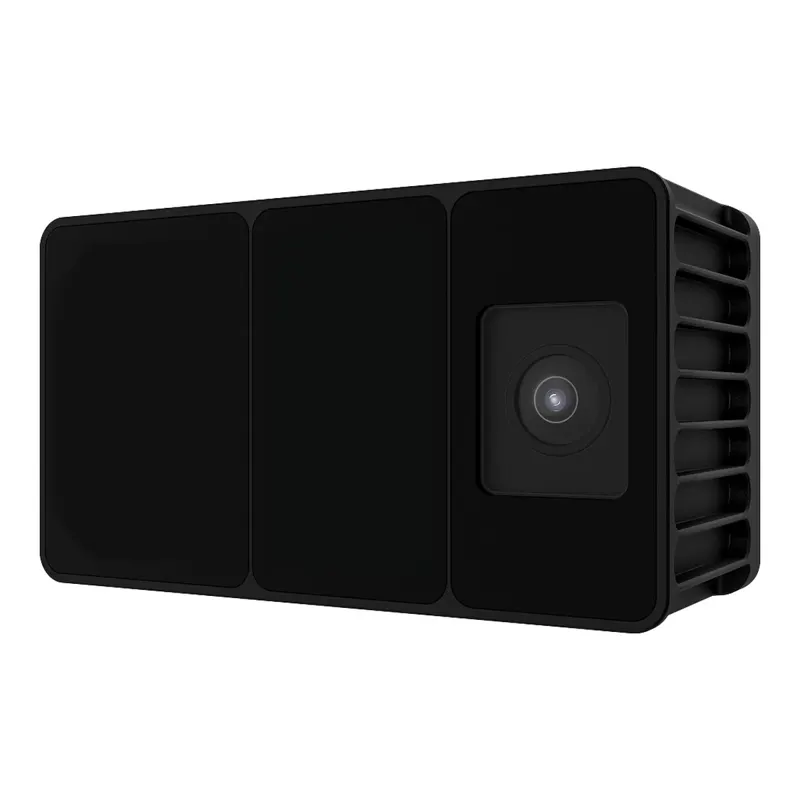
Manifold Tech's Odin1 is a spatial memory module for robots and UAVs: it packs a 940 nm, Class 1 eye-safe dToF depth engine (240x180 resolution, 0.2-30 m at 10% reflectivity, up to 70 m at 90%, up to 700,000 pts/s, +/-3 cm at 1 sigma, 120x90 deg FOV, 0.5x0.5 deg angular resolution, up to 15 FPS), a 1600x1296 global-shutter RGB camera (129 H x 104 V x 173 D deg FOV) and a high-rate IMU into a ~280 g, IP66 body measuring 100x62x43 mm. On-board compute provides native space-time synchronization and runs the in-house MindSLAM stack, so multi-sensor fusion, 3D mapping, 6DOF pose estimation and spatial-memory relocalization all happen inside the module, which then streams pose, true-color/raw point clouds, raw RGB and high-frequency IMU data directly - no external high-performance computer, no hand-built localization stack, no sensor-fusion tuning. Developers get a Linux C++ SDK plus ROS 1 / ROS 2 drivers (odin_ros_driver with point-cloud-to-depth, reprojection and image-overlay nodes and RViz configs) and can deploy custom SLAM algorithms; the MindCloud Studio / Go / Render suite and MindCloudX.AI cloud platform complete a real-to-sim loop of Pocket2 capture, MindCloud 3DGS processing, Isaac Sim training and Odin1 deployment. Official figures quote +/-5 cm + 1% SLAM positioning accuracy (with RTK correction) and 0.2% drift, 9-26 V input at 11 W rated / 24 W peak, and -10 C to 40 C operation. Odin1 ships on platforms such as Unitree H1, Astrall Dynamics and RoboForce TITAN, and sells for USD 999 in the official store (SKU ODIN1-001, B2B quoting for volume).

COMPONENT

Spatial Memory ModuleSLAM

As an Amazon Associate, we earn from qualifying purchases.