Skip to content
Tags
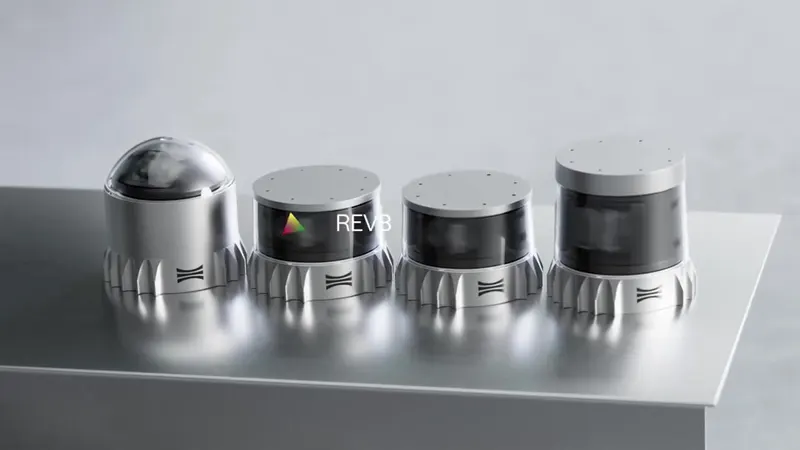
Ouster OS1 Max Rev8 256-Channel Long-Range High-Resolution Imaging Lidar

Ouster OS1 Max Rev8 256-Channel Long-Range High-Resolution Imaging Lidar

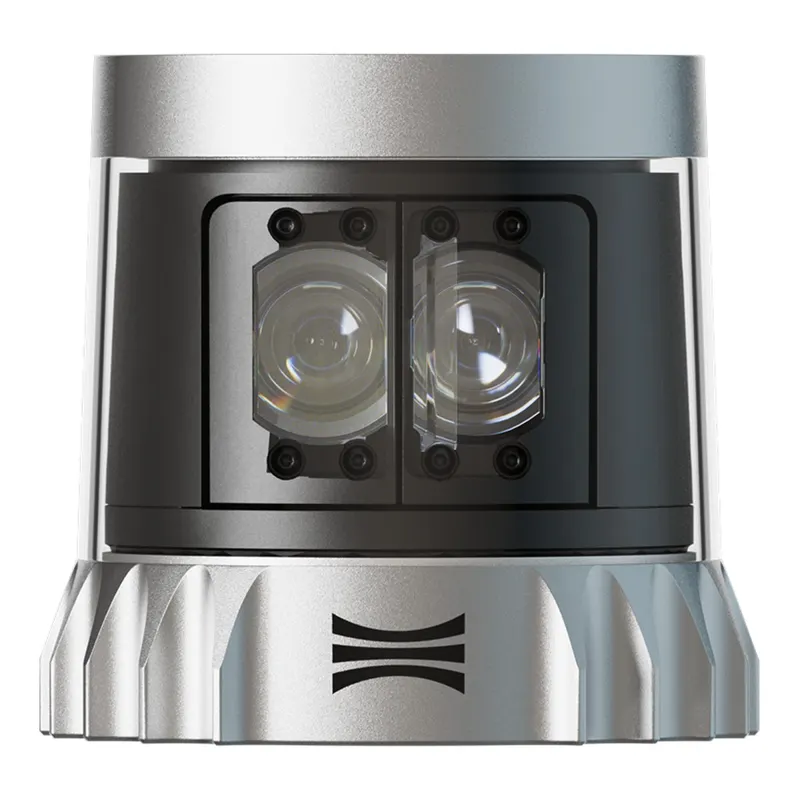
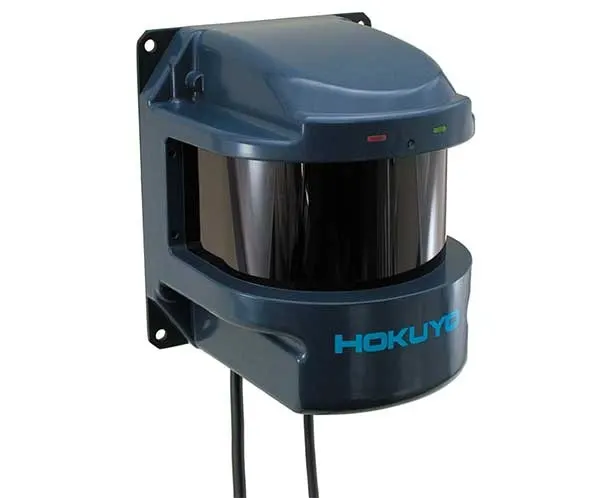
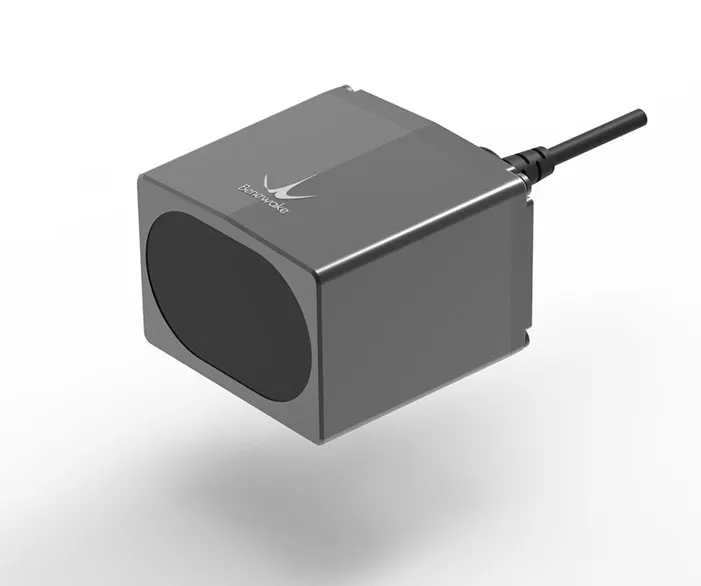
The Ouster OS1 Max is the flagship long-range imaging lidar of the Rev8 OS series and the first to reach 256 vertical channels (also 64/128): 865 nm Class 1 eye-safe laser, 360 deg x 43.9 deg FOV, 512-4096 horizontal columns, 5-40 Hz configurable rotation. In 1024 @ 10 Hz mode it reaches 350 m on 80% Lambertian targets and 200 m on 10% targets (both >90% detection probability at 100 klx sunlight), with 500 m max representable and 0 m minimum range; range accuracy is +/-1.25 cm (Lambertian) / +/-2.5 cm (retroreflective) at 0.1 cm resolution, up to 2 returns and 10,485,760 points per second. Native RGB-D color point cloud (116 dB dynamic range) carries RGB, range, signal, reflectivity, NIR, channel, azimuth and timestamp per point; a synchronous IMU runs at 640/1280/2560 Hz. Data leaves over gigabit Ethernet UDP with PTP/gPTP/NMEA/PPS time sync (<1 ms error) and <10 ms latency. It runs from 12/24 VDC (9-58 V) at 15-25 W (19 W nominal, 28 W peak starting at -40 C), measures 87 mm diameter x 82 mm and weighs 670 g (720 g with halo cap); IP68/IP69K, -40 to +85 C, 100 g shock and 10 Grms vibration. Engineered for functional safety (ASIL-B, SIL-2, PLd) with an on-sensor 3D Zone Monitor and designed for cybersecurity to ISO 21434 / UNECE WP.29 / IEC 62443 / ISO 27001. Built for long-range industrial sensing, off-highway vehicles, autonomous cars, trucks and buses, traffic and security monitoring, and 3D mapping vehicles.

COMPONENT

LiDAROusterLong DistanceRGB-DDigital LiDAR
Learning Agile Navigation in Crowded Environments for Quadruped Robots

Learning Agile Navigation in Crowded Environments for Quadruped Robots

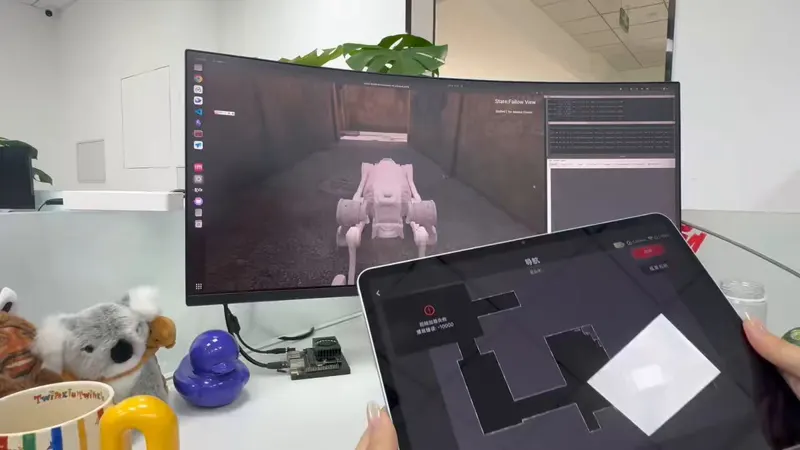
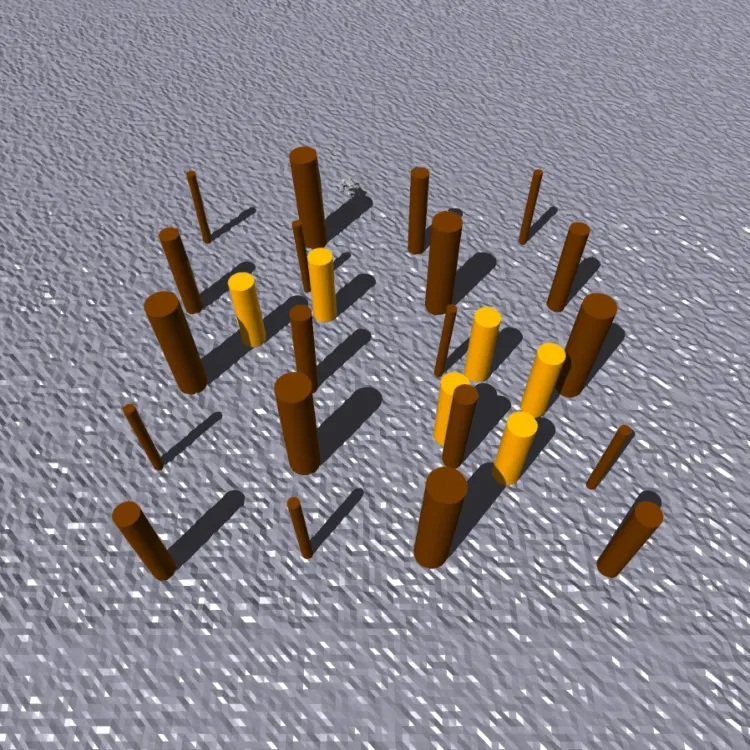
Navigating dynamic and crowded environments presents significant challenges for quadruped robots due to severe sensor occlusion and unpredictable human motion. Existing approaches face a trade-off: model-based methods, such as Velocity Obstacles (VO), theoretically guarantee safety but rely on accurate obstacle motion estimates that often fail in dense crowds, while end-to-end learning methods offer robustness but lack motion prediction capability of obstacles, leading to collisions or conservative behaviors. To solve this, we propose VOP-Nav, a novel navigation system that combines the geometric safety of VO with the agile adaptability of end-to-end learning. Using only local onboard observations, our system avoids explicit obstacle detection and tracking pipelines. The VOP-Net processes multi-frame LiDAR data to implicitly encode dynamic constraints and predict a safe velocity region derived from Velocity Obstacle theory. Importantly, the VO predictions serve a dual role: they are used as input to the navigation policy during inference and as a reward signal during training to encourage safe motion. Evaluations in Isaac Gym demonstrate that VOP-Nav achieves higher success rates than all baselines while balancing locomotion speed and collision avoidance. Real-world deployment on a Unitree Go2 quadruped robot further validates the system's robustness and efficiency in complex indoor and outdoor dynamic environments.

Shuyu Wu, Zeyu Liu, Tianbao ZhangJul 16, 2026
Quadruped robotsNavigationCrowded EnvironmentJul 16, 2026