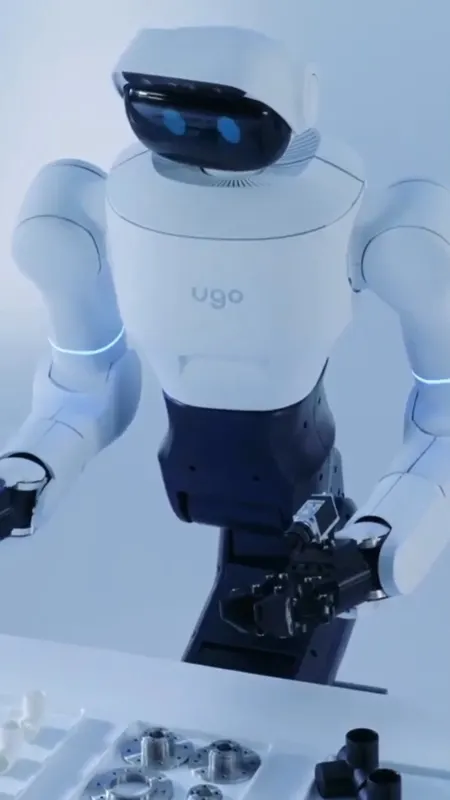
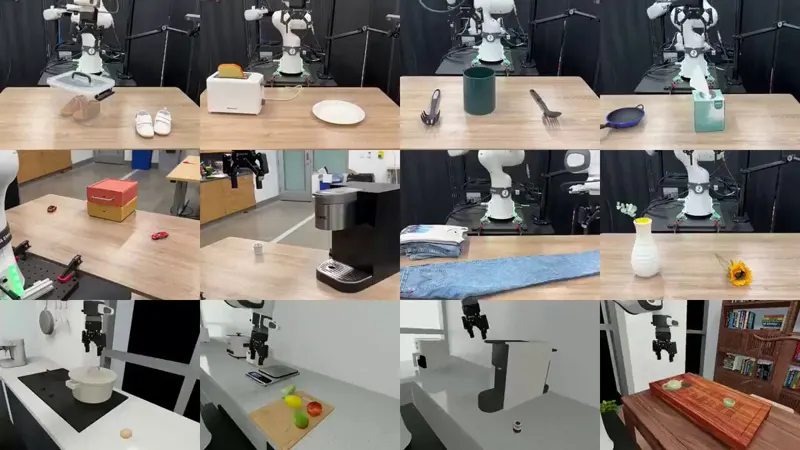
ugo Nova is a 22-DoF wheeled semi-humanoid with a 10 kg dual-arm payload, Jetson Thor onboard, and 100 Hz teleoperation that records synchronized video, joint, torque, and command data.
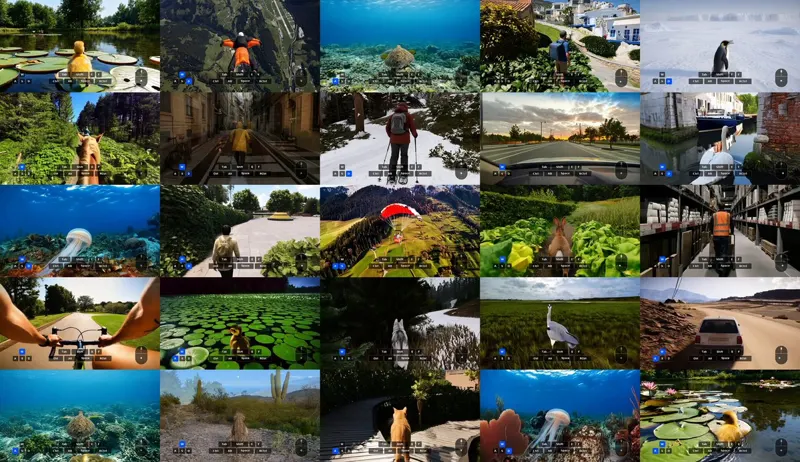
Odyssey-3 renders interactive generated worlds driven in real time by keyboard and mouse: a rabbit in a meadow, first-person cycling, a warehouse picker among shelves. If a world model can simulate infinite, intelligent worlds, it becomes the place where agents themselves are trained.
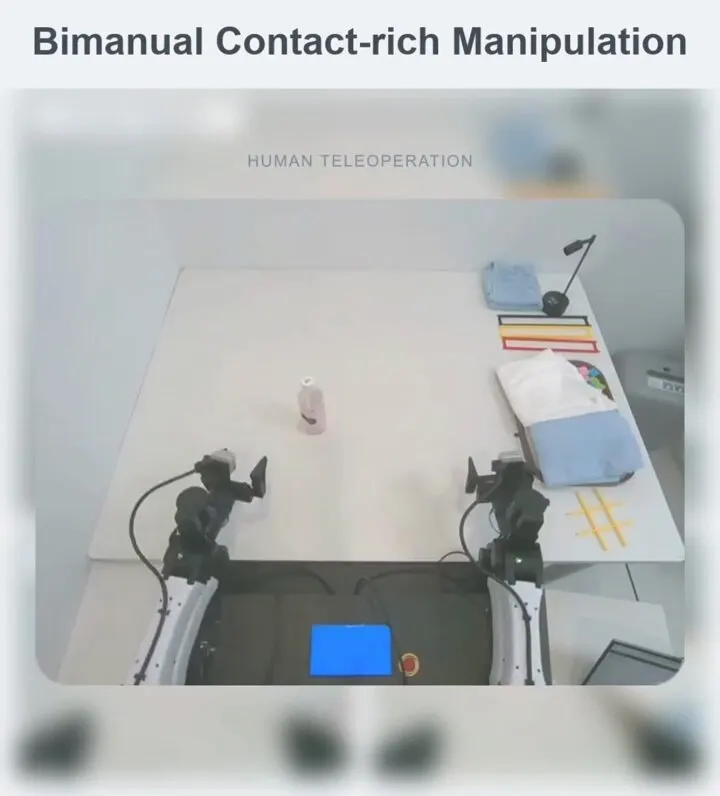
GPT-Policy releases code and new results: a fixed GPT-6 VLM, wrapped in a context compiler and a constrained Cartesian controller, drives dual arms in closed loop. Human video, goal images or a single demonstration let it perform occlusion-aware picking, bimanual contact-rich manipulation and gesture imitation zero-shot, with no gradient updates.
Odyssey-3 is an autoregressive diffusion-transformer foundation world model that controls robot arms, humanoids, cars, and drones with task-specific experiential data.
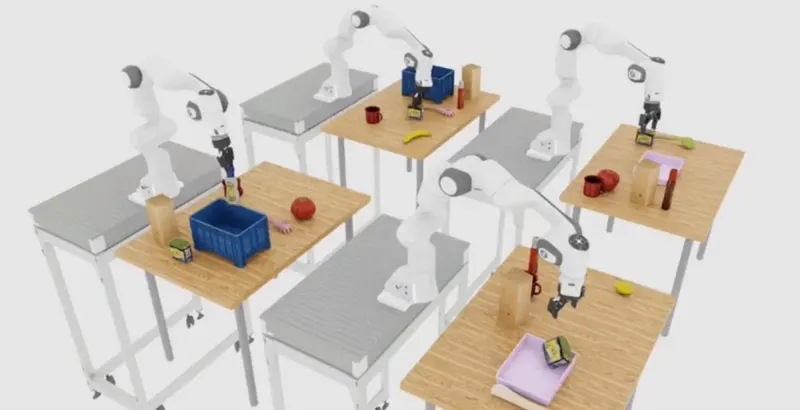
A policy that succeeds in a demo can still fail as tasks, environments, and conditions change. Open-source Isaac Lab-Arena 0.3 adds an experimental agentic workflow that generates simulation environments from natural language, evaluates policies across thousands of parallel GPU environments, and pinpoints where and why failures occur.
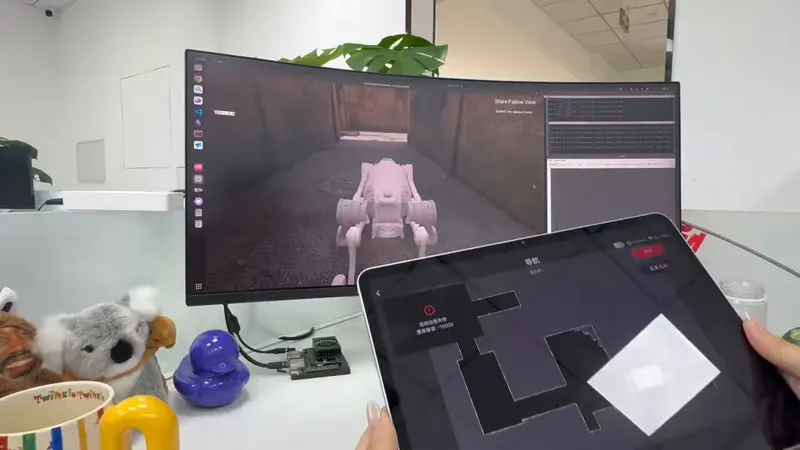
MATRiX combines UE5 and MuJoCo in a processor-in-the-loop robot simulation, streaming dual Airy LiDAR and front/rear RGB sensor data to Jetson NX and RK3588 hardware.
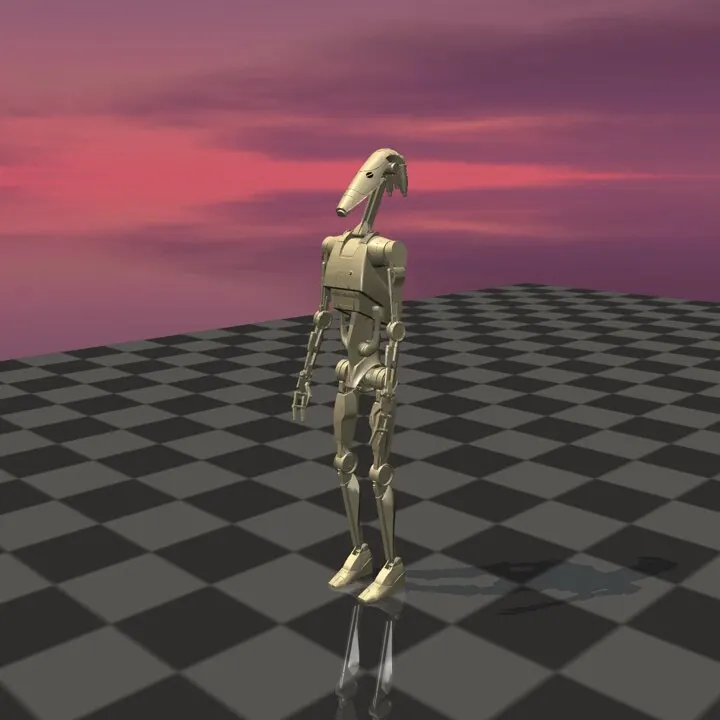
Using mjbatch to run parallel MuJoCo rollouts, the author trained a bipedal humanoid locomotion policy in just 15 minutes on a MacBook Air M2; the clip shows the simulated robot following velocity commands.
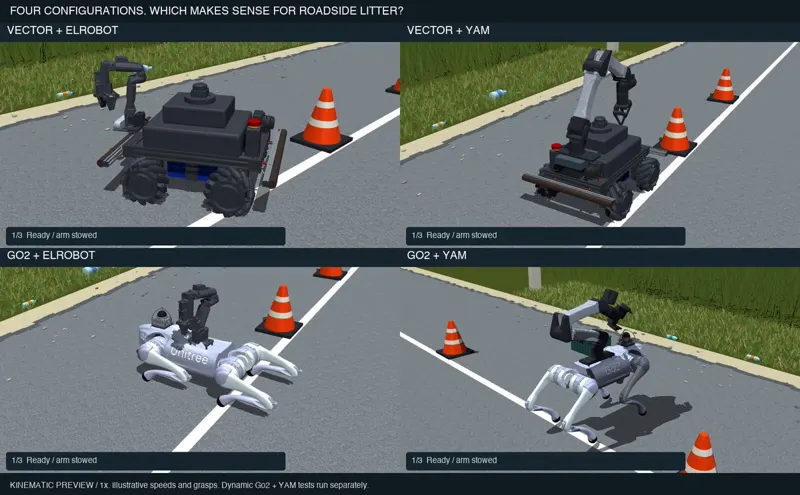
A scripted simulation compares Vector, a mecanum rover, and Unitree Go2 with YAM or ElRobot arms on the same roadside-litter task: collect three bottles and return them to a crate.
Proxy Policy Steering trains a reference proxy and a task proxy whose calibrated velocity-space residual steers a frozen base sampler at every denoising step. Across 8 real-world and 4 simulation tasks it lifts the pi-0.5 base by 53% absolute success on average while keeping broad capabilities such as failure recovery.
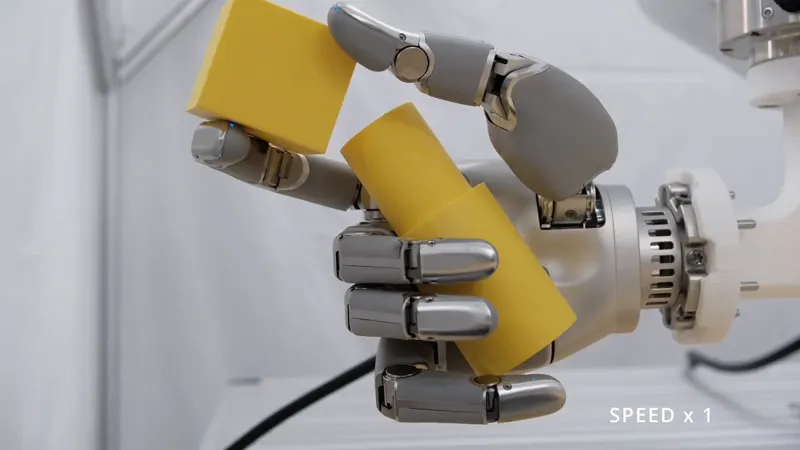
In-hand assembly mates two rigid parts inside a single 22-DoF dexterous hand, with one group of fingers holding and stabilizing while another aligns and inserts. Trained purely in simulation with RL, the policies transfer zero-shot to hardware using one camera; closed-loop assembly reaches 15/20 (bottle), 17/20 (syringe) and 16/20 (marker) against 2/20, 0/20 and 0/20 for open-loop replay.
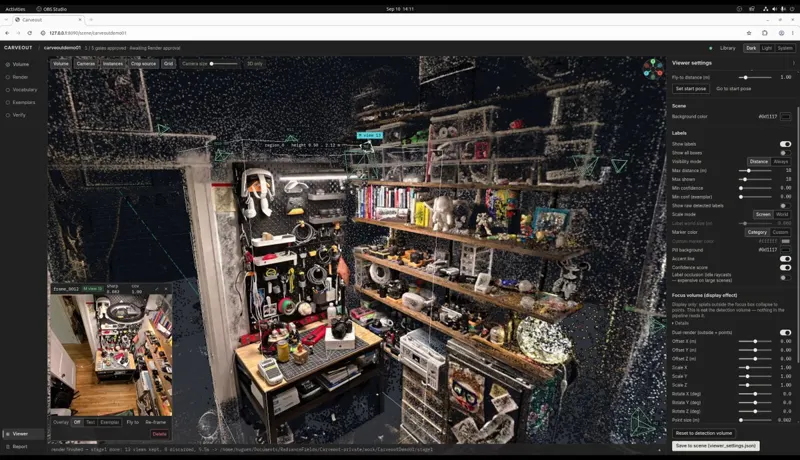
Carveout propagates segmentation from rendered views back down to individual Gaussians to give existing 3D Gaussian Splat scenes object-level understanding: it renders views, segments and identifies objects, accumulates evidence across views, then groups labeled Gaussians into 3D instances with bounding boxes and metadata. The current version runs fully locally on SAM 3 and Qwen 3.8 27B, with a reworked web UI, and is due for release in the next few days.
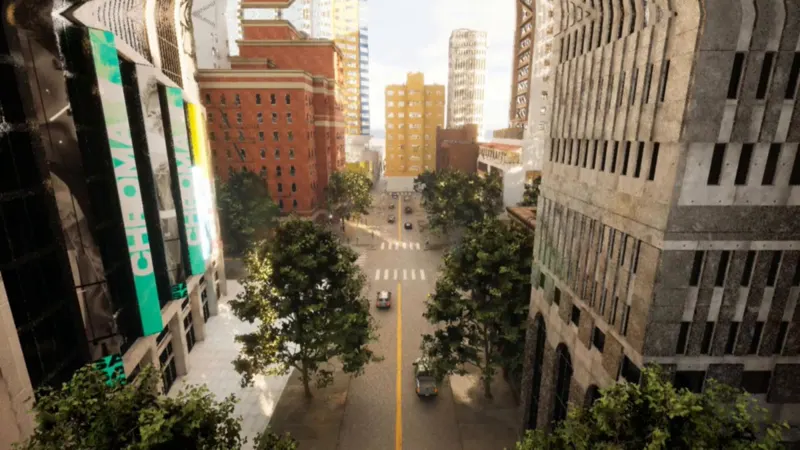
An Unreal Engine 5 platform where coding agents build verifiable training worlds that co-evolve with embodied learners.
As an Amazon Associate, we earn from qualifying purchases.