Skip to content
← Back to Components

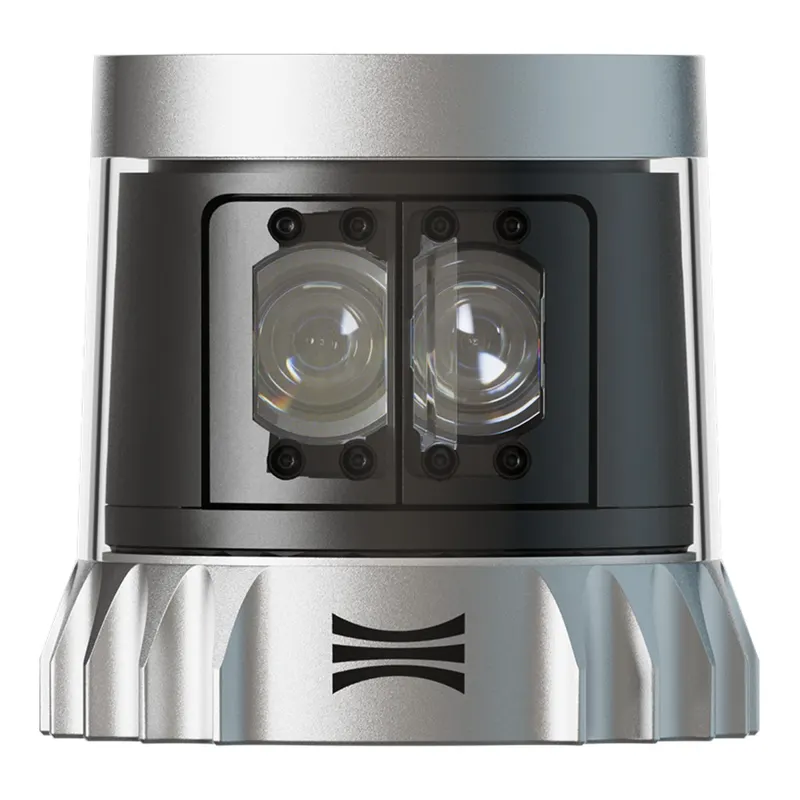
Ouster OS0 Ultra-Wide View High-Resolution Imaging Lidar

Vendor: Ouster, Inc. (USA, NYSE: OUST)

Product: OS0
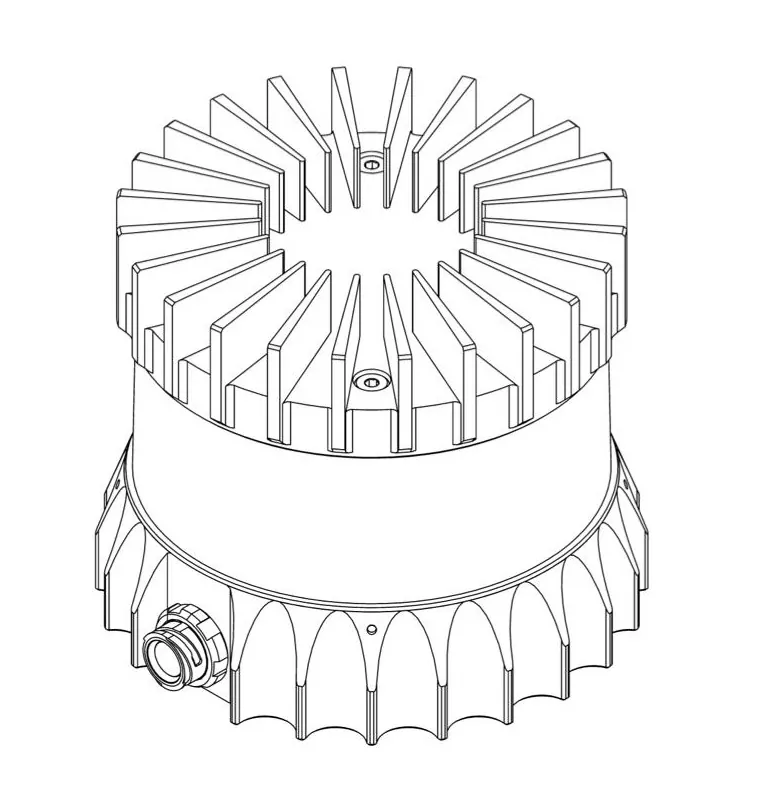
Ouster OS0 Ultra-Wide View High-Resolution Imaging Lidar

The Ouster OS0 is the Rev8 ultra-wide short-range imaging lidar: 90 deg vertical FOV (+45 to -45) and 360 deg horizontal, 32/64/128 channels, 512-4096 horizontal columns (0.088 deg angular resolution at 4096) and 5-40 Hz configurable rotation. In 1024 @ 10 Hz mode it reaches 75 m on 80% Lambertian targets and 35 m on 10% targets, both at >90% detection probability under 100 klx sunlight, with 500 m max representable range and a minimum range configurable down to 0 m (0.5 m default, 0.3 m optional). Range accuracy is +/-1.25 cm (Lambertian) / +/-2.5 cm (retroreflective) - 2x better precision and accuracy than Rev7 - at 0.1 cm range resolution, with up to 2 returns and 10,485,760 points per second; the 865 nm laser is Class 1 eye-safe. Native RGB-D color point cloud (116 dB dynamic range) carries RGB, range, signal, reflectivity, NIR, channel, azimuth and timestamp per point, with a synchronous IMU at 640/1280/2560 Hz. Data leaves over gigabit Ethernet UDP with PTP/gPTP/NMEA/PPS time sync (<1 ms error) and <10 ms latency. It runs from 12/24 VDC (9-58 V) at 10-20 W, measures 87 mm diameter x 58.35 mm and weighs 500 g (580 g with halo cap); IP68/IP69K, -40 to +85 C (Rev7 was +60 C), 100 g shock, 10 Grms vibration and MTTF over 250,000 h. Engineered for functional safety (ASIL-B, SIL-2, PLd) with an on-sensor 3D Zone Monitor and designed for cybersecurity to ISO 21434 / UNECE WP.29 / IEC 62443 / ISO 27001. Built for AMRs, AGVs, inspection robots, heavy machinery, drones and mapping solutions that need close-range blind-spot perception and high-accuracy 3D modeling.

Imu640 / 1280 / 2560 Hz (3-axis gyro + 3-axis accelerometer)
Mttf>250,000 h
Weight500 g (580 g with halo cap)
Returnsup to 2
SoftwareOuster Python SDK, C++ Driver, Ouster Studio; ROS2, ROS, NVIDIA Driveworks, NVIDIA Isaac / IsaacSim, MATLAB
InterfaceUDP over gigabit Ethernet (1000BASE-T)
Time SyncPTP / gPTP / NMEA $GPRMC / external PPS, <1 ms
DimensionsØ87 x 58.35 mm (74.2 mm with thermal cap)
Point DataRGB, Range, Signal, Reflectivity, NIR, Channel, Azimuth, Timestamp
Laser ClassClass 1 eye-safe (IEC/EN 60825-1:2014)
Data Latency< 10 ms
Storage Temp-40 to +105 °C
CybersecurityISO 21434, UNECE WP.29, IEC 62443, ISO 27001
Dynamic Range116 dB
Field Of View360° x 90° vertical (+45° to -45°)
Minimum Range0.0 m (configurable; 0.5 m default, 0.3 m optional)
Rotation Rate5, 10, 15, 20, 30, or 40 Hz
Operating Temp-40 to +85 °C
Range Accuracy±1.25 cm (Lambertian), ±2.5 cm (retroreflectors)
Beam Divergence0.35° (FWHM)
Detection Range75 m @ >90% detection (80% reflectivity, 100 klx); 35 m @ 10%
Range Precision±0.25 to ±1.5 cm (1 std deviation)
Shock Vibration100 g shock; 10 Grms vibration
Laser Wavelength865 nm
Range Resolution0.1 cm
Functional SafetyASIL-B, SIL-2, PLd (on-sensor 3D Zone Monitor)
Operating Voltage12/24 VDC nominal (9-58 V)
Points Per Second10,485,760
Power Consumption10-20 W (15 W nominal; 22 W peak at -40 °C)
Ingress ProtectionIP68 / IP69K
False Positive Rate1 / 10,000
Vertical Resolution32, 64, or 128 channels
Horizontal Resolution512 / 1024 / 2048 / 4096 columns
Max Representable Range500 m
Angular Sampling Accuracy±0.01° (vertical & horizontal)
Horizontal Angular Resolution0.088° (4096 columns)

Related Components

Ouster OS1 Max Rev8 256-Channel Long-Range High-Resolution Imaging Lidar

Ouster OS1 Max Rev8 256-Channel Long-Range High-Resolution Imaging Lidar

The Ouster OS1 Max is the flagship long-range imaging lidar of the Rev8 OS series and the first to reach 256 vertical channels (also 64/128): 865 nm Class 1 eye-safe laser, 360 deg x 43.9 deg FOV, 512-4096 horizontal columns, 5-40 Hz configurable rotation. In 1024 @ 10 Hz mode it reaches 350 m on 80% Lambertian targets and 200 m on 10% targets (both >90% detection probability at 100 klx sunlight), with 500 m max representable and 0 m minimum range; range accuracy is +/-1.25 cm (Lambertian) / +/-2.5 cm (retroreflective) at 0.1 cm resolution, up to 2 returns and 10,485,760 points per second. Native RGB-D color point cloud (116 dB dynamic range) carries RGB, range, signal, reflectivity, NIR, channel, azimuth and timestamp per point; a synchronous IMU runs at 640/1280/2560 Hz. Data leaves over gigabit Ethernet UDP with PTP/gPTP/NMEA/PPS time sync (<1 ms error) and <10 ms latency. It runs from 12/24 VDC (9-58 V) at 15-25 W (19 W nominal, 28 W peak starting at -40 C), measures 87 mm diameter x 82 mm and weighs 670 g (720 g with halo cap); IP68/IP69K, -40 to +85 C, 100 g shock and 10 Grms vibration. Engineered for functional safety (ASIL-B, SIL-2, PLd) with an on-sensor 3D Zone Monitor and designed for cybersecurity to ISO 21434 / UNECE WP.29 / IEC 62443 / ISO 27001. Built for long-range industrial sensing, off-highway vehicles, autonomous cars, trucks and buses, traffic and security monitoring, and 3D mapping vehicles.

LiDAROuster
Bothlent XFM-10X21-MINI Acoustic Noise Reduction Module

Bothlent XFM-10X21-MINI Acoustic Noise Reduction Module

The XFM-10X21-MINI is a standardized acoustic noise-reduction hardware module from Bothlent for AI robots, smart cockpits, ATMs, hospital queue terminals, and other AIoT devices. It combines environmental noise removal, echo cancellation, VoIP call noise reduction, microphone-array wake-up, sound-source localization, and super-directional pickup with voice-separation and sound-classification algorithms. Beyond speech processing, it distinguishes natural sounds such as thunder, birds, and animals from specific human sounds such as snoring and coughing, making it suitable for noise-pollution control, smart security, and home health-monitoring devices. The vendor page does not disclose the microphone-array count, pickup range, interface, or electrical specifications.

Acoustic Noise Reduction ModuleVoice Separation
Bothlent RDM-Lite-X2 Android Board for Voice and Video Large Models

Bothlent RDM-Lite-X2 Android Board for Voice and Video Large Models

RDM-Lite-X2 is a Bothlent Android board designed for voice and video large-model integration in AI robots, intelligent voice terminals, and industrial IoT devices. Its microphone array and on-device acoustic algorithms support 1-5 m interaction, 180- or 360-degree sound-source localization, directional pickup, environmental sound classification, multi-speaker separation, and 0.3-second wake-up. The board connects to Doubao, Coze, Qwen, Tencent Hunyuan, and MiniMax and supports Android application development and integration.

Android BoardVoice and Video Models
Bothlent RDM-Lite-X1 AI Voice Interaction Module

Bothlent RDM-Lite-X1 AI Voice Interaction Module

RDM-Lite-X1 combines a sound card and Android mainboard in one voice-interaction module for AI robots, intelligent voice terminals, and industrial IoT systems. It uses a microphone array and a 6 TOPS NPU to support 1-5 m interaction, 180- or 360-degree sound-source localization, directional pickup, environmental sound classification, multi-speaker separation, and 0.3-second wake-up. It connects to Doubao, Coze, Qwen, Tencent Hunyuan, and MiniMax, supports secondary Android application development, and adds visual detection to acoustic processing through the AVSS multimodal approach.

AI Voice ModuleSound Source Localization

As an Amazon Associate, we earn from qualifying purchases.