Skip to content
Tags

#Navigation (24)

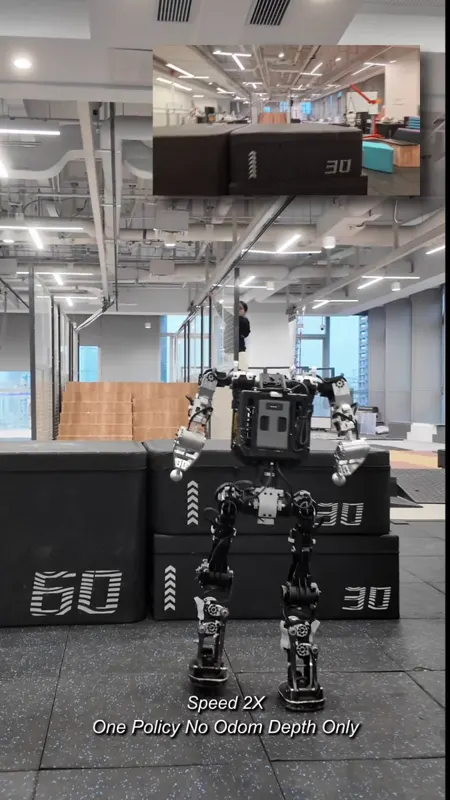
TANGO: Humanoid Navigation in Cluttered Environments with a Whole-Body Vision-Language-Action Model

TANGO: Humanoid Navigation in Cluttered Environments with a Whole-Body Vision-Language-Action Model

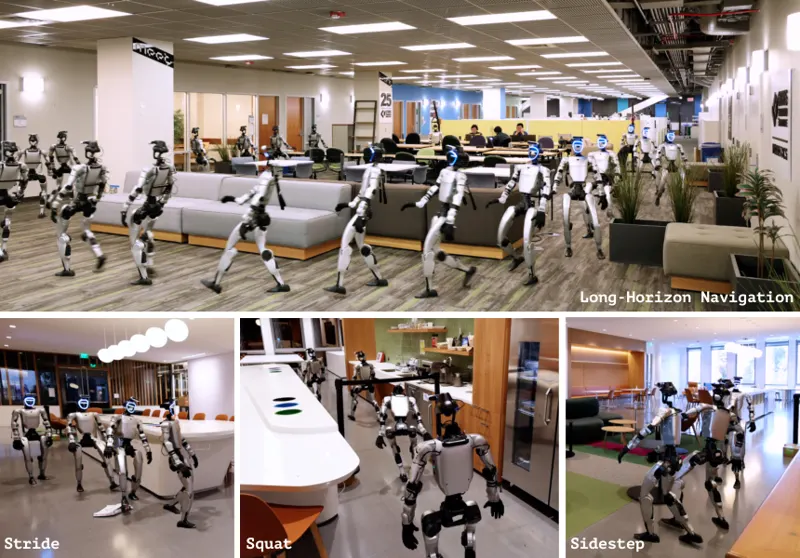
We study the problem of navigating cluttered indoor environments with a humanoid robot. Unlike conventional methods that model navigation as a 2D path planning problem, humanoid traversal in cluttered environments requires continuous geometry-aware whole-body adaptation, including coordinated arm placement, torso adjustment, and gait modulation for collision-free movement through complex 3D spaces. We introduce TANGO, the first whole-body vision-language navigation framework for language-conditioned humanoid traversal in cluttered environments. Given a natural-language instruction and egocentric RGB observations, TANGO directly predicts 29-DoF joint-space actions for downstream whole-body control. We train TANGO entirely in simulation by synthesizing diverse collision-free traversal behaviors via global path planning, kinematic whole-body motion generation, obstacle-aware motion editing, and RL-based tracking. This pipeline provides dynamically feasible action supervision for learning language-conditioned whole-body policies. In extensive simulation experiments, TANGO demonstrates state-of-the-art performance in vision-language navigation, while outperforming strong modular baselines in navigating challenging scenes requiring obstacle negotiation. Lastly, we deploy TANGO zero-shot on a Unitree G1 humanoid robot, and observe robust language-guided traversal in cluttered real-world scenes without training on any real-world navigation data.

Anqi Li, Yuxin Chen, Zhaobo LiSep 8, 2026
HumanoidVLANavigationSep 8, 2026
ABot-AgentOS: A General Robotic Agent OS with Lifelong Multi-modal Memory

ABot-AgentOS: A General Robotic Agent OS with Lifelong Multi-modal Memory

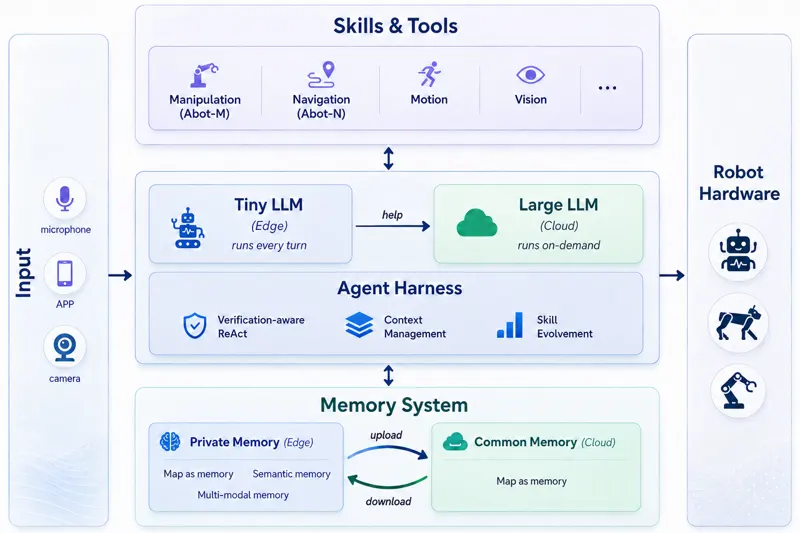
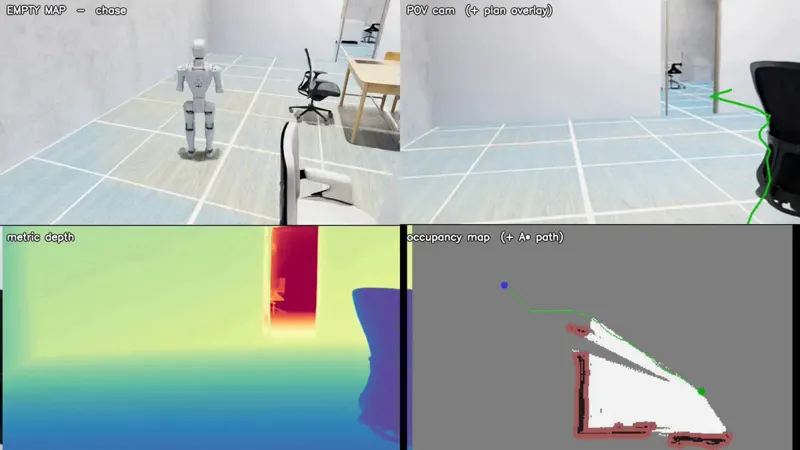
Recent VLM and VLA systems have improved robotic perception and action prediction, yet long-horizon embodied agents still require a general runtime layer for reasoning, memory, tool use, verification, and cross-embodiment execution. We present ABot-AgentOS, a general robotic Agent Operating System that sits above low-level controllers and provides a deliberative agent layer for scene-conditioned planning, context-isolated skill execution, multi-stage verification, multi-modal memory, and edge-cloud collaboration. To evaluate such systems, we introduce EmbodiedWorldBench, an executable benchmark with 16 indoor, outdoor, and hybrid scenes, four difficulty levels, and over 200 tasks involving navigation, object search, NPC dialogue, dynamic events, and trace-grounded scoring. ABot-AgentOS further introduces Universal Multi-modal Graph Memory, a persistent source-grounded substrate that converts dialogue, visual observations, spatial context, temporal relations, and task traces into typed nodes and edges. A failure-driven self-evolution loop converts diagnosed memory failures into gated runtime evo-assets that are promoted only to later evaluation splits, preventing current-split ground-truth leakage while enabling continual improvement. On an initial EmbodiedWorldBench subset, ABot-AgentOS improves over a single-controller baseline in both task success and goal completion. Across memory benchmarks, ABot-AgentOS Static achieves 87.5 on LoCoMo, 59.9 on OpenEQA EM-EQA, 88.6 on Mem-Gallery, and 76.5 Acc@All on NExT-QA; self-evolution further improves LoCoMo to 88.7, OpenEQA to 60.4, and Mem-Gallery to 89.0. These results suggest that a general Agent OS layer can improve long-horizon embodied execution while providing persistent, auditable memory for continual interaction.

Jiayi Tian, Shiao Liu, Yuting XuJul 11, 2026
AgentOSEmbodiedWorldBenchVLAJul 11, 2026
Learning Agile Navigation in Crowded Environments for Quadruped Robots

Learning Agile Navigation in Crowded Environments for Quadruped Robots

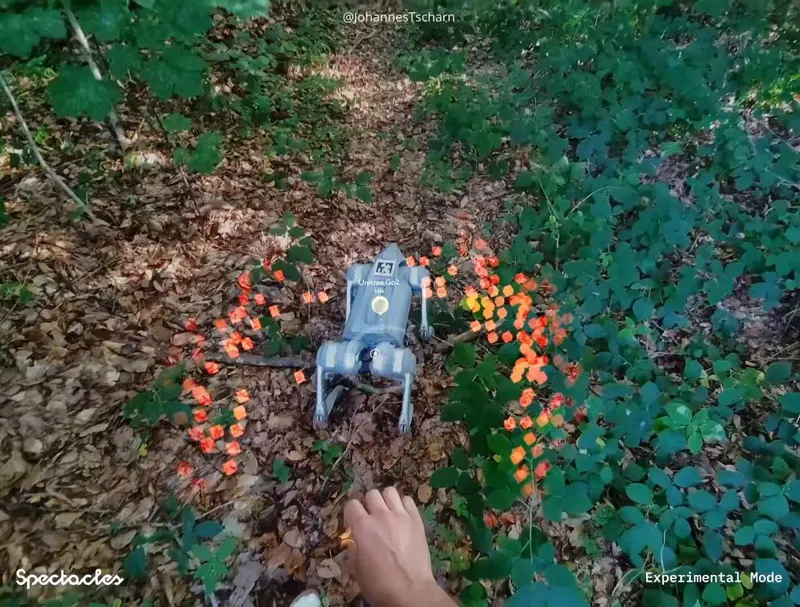
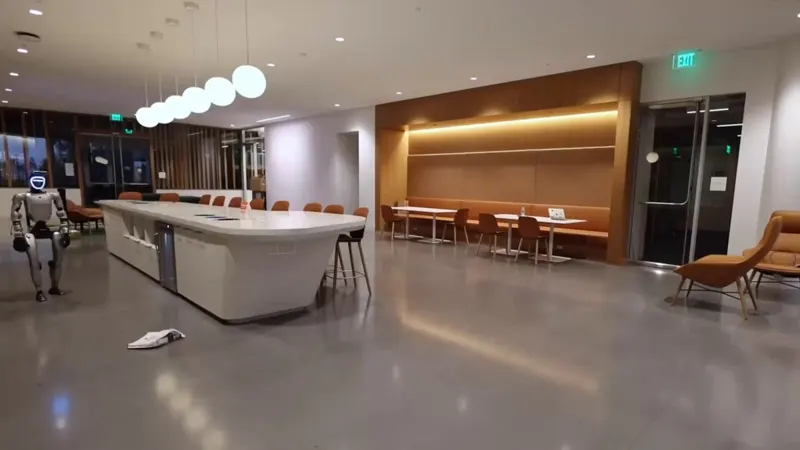
Navigating dynamic and crowded environments presents significant challenges for quadruped robots due to severe sensor occlusion and unpredictable human motion. Existing approaches face a trade-off: model-based methods, such as Velocity Obstacles (VO), theoretically guarantee safety but rely on accurate obstacle motion estimates that often fail in dense crowds, while end-to-end learning methods offer robustness but lack motion prediction capability of obstacles, leading to collisions or conservative behaviors. To solve this, we propose VOP-Nav, a novel navigation system that combines the geometric safety of VO with the agile adaptability of end-to-end learning. Using only local onboard observations, our system avoids explicit obstacle detection and tracking pipelines. The VOP-Net processes multi-frame LiDAR data to implicitly encode dynamic constraints and predict a safe velocity region derived from Velocity Obstacle theory. Importantly, the VO predictions serve a dual role: they are used as input to the navigation policy during inference and as a reward signal during training to encourage safe motion. Evaluations in Isaac Gym demonstrate that VOP-Nav achieves higher success rates than all baselines while balancing locomotion speed and collision avoidance. Real-world deployment on a Unitree Go2 quadruped robot further validates the system's robustness and efficiency in complex indoor and outdoor dynamic environments.

Shuyu Wu, Zeyu Liu, Tianbao ZhangJul 16, 2026
Quadruped robotsNavigationCrowded EnvironmentJul 16, 2026
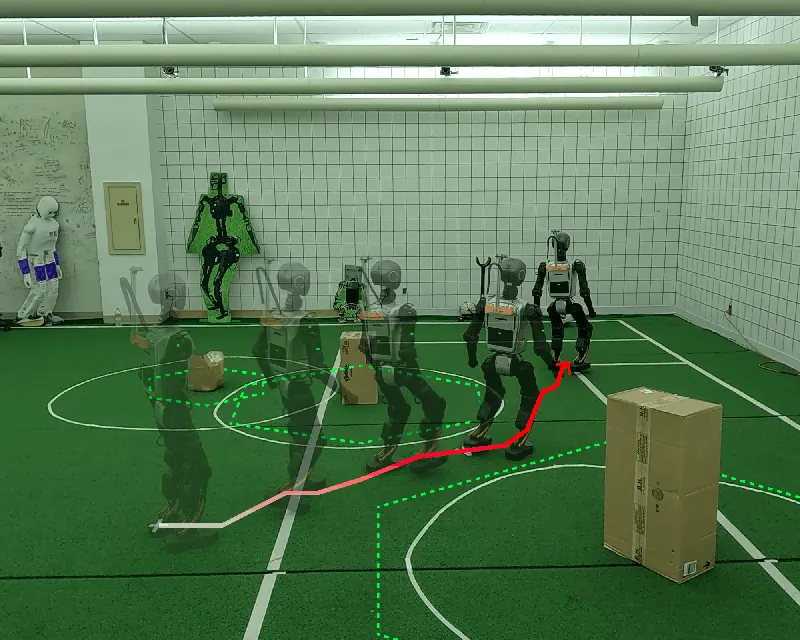
RAVEN: Reinforcement-Adaptive Visibility-Graph Planning for Robust Humanoid Navigation with Collision-Free MPC

RAVEN: Reinforcement-Adaptive Visibility-Graph Planning for Robust Humanoid Navigation with Collision-Free MPC

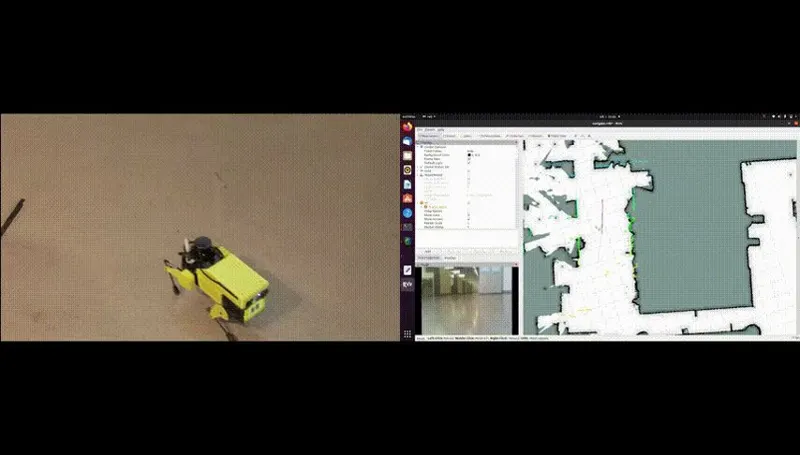
Humanoid navigation in dynamic environments requires long-horizon planning while respecting short-horizon dynamic and safety constraints. Classical visibility-graph planners combined with model predictive control (MPC) can efficiently generate collision-free trajectories, but their performance depends on manually tuned parameters and accurate system modeling. In real robotic systems, control delays, state-estimation noise, and locomotion uncertainties can cause overshoot and constraint violations even when the nominal path is geometrically optimal. We propose RAVEN, a hierarchical reinforcement learning (RL)-MPC framework for robust humanoid navigation. Unlike prior approaches that use learning to tune cost weights or replace planning entirely, RAVEN employs RL to adapt the geometric construction of a visibility-graph planner by modifying obstacle inflation and related graph parameters. By directly reshaping the free-space geometry, the learned planner alters the topology of the global path to compensate for delay and tracking imperfections. A collision-free MPC layer then tracks the planned trajectory while explicitly enforcing velocity bounds and obstacle-avoidance constraints. By training under realistic delays and observation noise, RAVEN learns planning adaptations that improve robustness while retaining explicit long-horizon geometric planning and constrained optimization, in contrast to end-to-end learning approaches. We evaluate RAVEN against a manually tuned visibility-graph MPC baseline and a pure RL navigation policy. Results demonstrate reduced overshoot near obstacles, improved robustness in narrow passages, and more reliable navigation under delay and noise. These findings indicate that reinforcement-adaptive graph construction combined with constrained MPC provides an effective and interpretable alternative to end-to-end learning for robust humanoid navigation.

Ruochen Hou, Shiqi Wang, Beom Jun KimJul 17, 2026
MPCNavigationGait optimizationJul 17, 2026