Skip to content
CoorDex: Coordinating Body and Hand Priors for Continuous Dexterous Humanoid Loco-Manipulation

CoorDex: Coordinating Body and Hand Priors for Continuous Dexterous Humanoid Loco-Manipulation

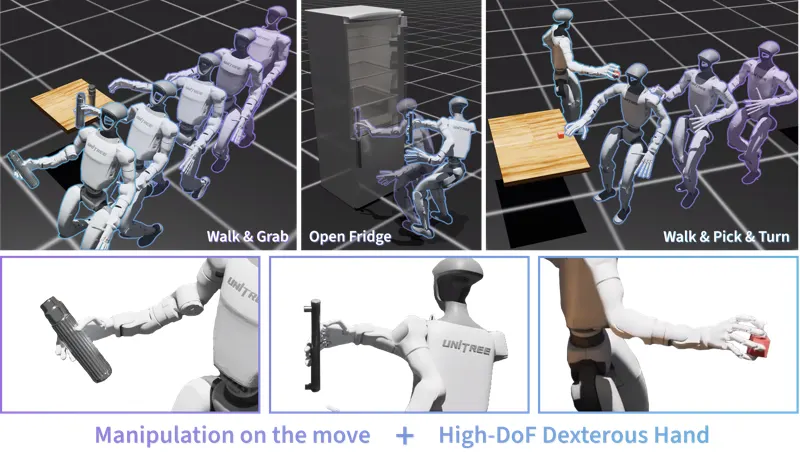
Humanoid loco-manipulation is often simplified into a stop-and-go process: walking to an object, stopping to manipulate it, and then resuming locomotion. It also commonly relies on low degree-of-freedom (DoF) end effectors that behave like an open-close grasp primitive. We introduce CoorDex, a learning pipeline that converts high-dimensional body and dexterous hand control into coordinated latent residual control, enabling high-DoF dexterous loco-manipulation on the move. Starting from simulated whole-body and hand demonstrations, CoorDex trains privileged motion tracking teachers for the humanoid body and dexterous hand, distills them into proprioception-conditioned latent priors, and uses the frozen priors as the action space for downstream residual reinforcement learning. A coordinated latent residual policy composes these priors through shared task context and separate body-hand residual heads, preserving natural whole-body motion while improving finger-level contact reliability. CoorDex enables a Unitree G1 humanoid with a 20-DoF WUJI hand to execute dexterous manipulation while in motion, including non-stop bottle grasping and carrying, fridge door opening on the move, and cube pick-and-turn. Ablations on the walk-grasp-carry task show that joint-space PPO, joint-space hand control, and monolithic latent prediction all fail under the same reward budget, while the latent-prior interface and coordinated residual structure make high-dimensional contact-rich loco-manipulation trainable. Project Page: https://skevinci.github.io/coordex/

Loco-manipulationCoorDex
Sikai Li, Shuning Li, Zhenyu Wei · 473 views · Jun 22, 2026
FastDSAC: Enhancing Policy Plasticity via Constrained Exploration for Scalable Humanoid Locomotion

FastDSAC: Enhancing Policy Plasticity via Constrained Exploration for Scalable Humanoid Locomotion

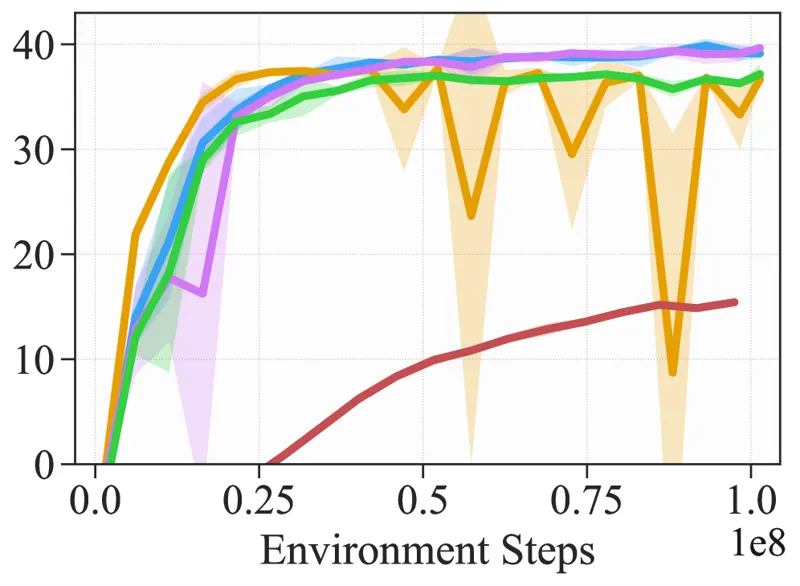
Scalable reinforcement learning has popularized high-throughput sampling architectures, which significantly compresses the training time for off-policy methods in robotic locomotion. However, the rapid increase of data volume and update frequency undermines the stability of value-based methods and diminishes the plasticity of policy networks. To address these challenges, this work presents FastDSAC, a fast and high-performance variant of the Distributional Actor-Critic algorithm designed for parallel sampling scenarios. Specifically, we introduce a truncated Gaussian distribution to approximate the learned policy, which effectively excludes out-of-distribution actions that strain target value estimation while keeping necessary stochasticity for exploration. The proposed action constraint functions as an implicit regularization, which counteracts the plasticity loss typically caused by aggressive gradient updates. This preservation of network adaptability enhances sample efficiency, particularly in scenarios with a high update-to-data ratio, and accelerates the early training process. In contrast to prior fast reinforcement learning approaches that rely on discrete value distributions, our method utilizes a continuous Gaussian representation equipped with adaptive variance regulation, which improves value estimation accuracy by sampling confident and informative transitions. Extensive experiments on MuJoCo Playground and HumanoidBench demonstrate that FastDSAC not only stabilizes the overall training process but also achieves superior asymptotic performance and faster convergence compared to state-of-the-art baselines.

SACPlasticity
Guanchen Lu, Yajuan Dun, Yi Zhou · 412 views · Jun 30, 2026
Reinforcement Learning-Based Control for an Inline Skating Humanoid Robot

Reinforcement Learning-Based Control for an Inline Skating Humanoid Robot

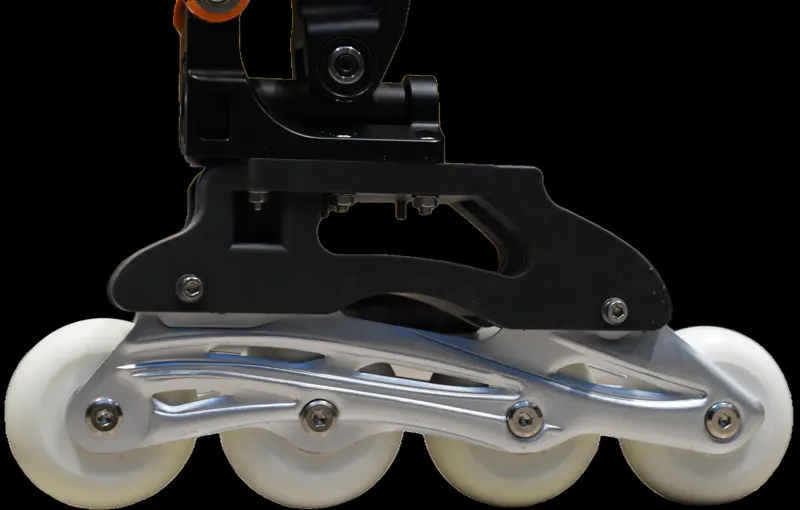
As humanoid robots become increasingly dynamic, coupling them with reinforcement learning offers a promising approach to solving the complex, underactuated mechanics of passive inline skating. Equipping a humanoid robot with passive inline skating wheels presents an opportunity to combine the versatile agility of humanoids with the high-speed, energy-efficient locomotion strategies utilized by human skaters. In this paper, we train and deploy a reinforcement learning control policy that enables novel locomotion strategies for a humanoid robot modified to equip consumer inline skates instead of conventional feet. Unlike previous work limited to quadrupedal robots or actively driven wheels, our system allows for precise 6-DoF control of the skates to execute dynamic, edge-driven propulsion strategies. Our skating strategies emerge entirely from our reward structure, without reliance on human motion data, imitation learning, or kinematic priors. We overcome the inherent instability of passive wheels and simulation contact artifacts by utilizing different geometric wheel models (spherical and ellipsoidal) during training and validation, along with a custom success-based command curriculum and a specialized rolling reward. Consequently, our policy demonstrates up to a 50% reduction in Cost of Transport (CoT) compared to standard walking gaits. The resulting policy successfully transfers zero-shot to the physical Booster T1 hardware. Real-world deployments demonstrate dynamic balance, the ability to reject active physical perturbations, and agile locomotion strategies capable of turning at speed. A video of our results can be found at https://www.youtube.com/watch?v=-_APcOS7uFo.

Inline SkatingGait optimization
Ethan Marot, Thomas Bi, Clemens Schwarke · 419 views · Jun 30, 2026
SKooP: Symmetric Koopman Predictions for Faster and More Generalizable Legged Robot Locomotion with Reinforcement Learning

SKooP: Symmetric Koopman Predictions for Faster and More Generalizable Legged Robot Locomotion with Reinforcement Learning

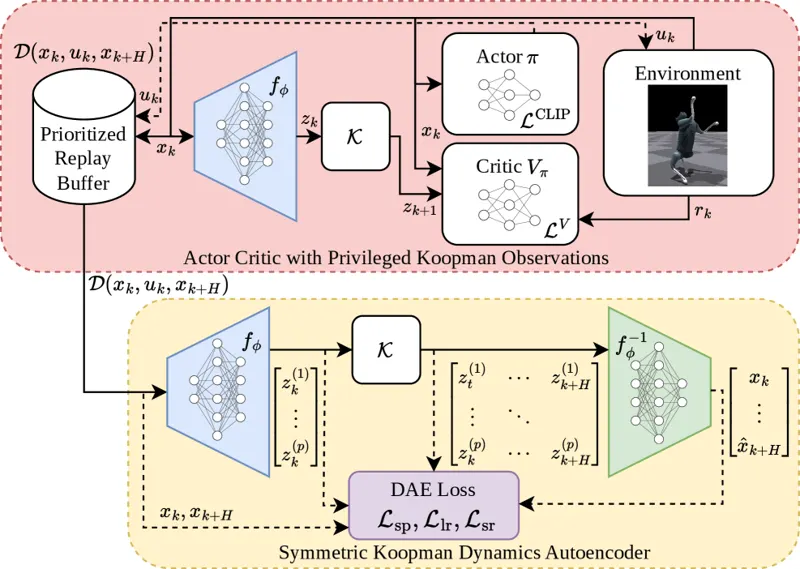
Reinforcement learning (RL) algorithms classically suffer from poor sample efficiency. In robotics, a recent line of work has emerged addressing this problem by encoding physics priors in the learning process. However, most of these approaches are validated on well-defined, low-dimensional benchmark systems rather than high-dimensional robots with complex nonlinear dynamics. In this paper, we introduce SKooP (Symmetric Koopman Predictions), an approach combining the advantages of morphological symmetries with those of a Koopman model learned via autoencoder to enhance policy learning. SKooP learns a Koopman model of the system dynamics alongside the policy. The resulting Koopman predictions are used as privileged observations for the critic, allowing the agent to learn based on smoother, more informative features. We also incorporate group symmetries into the actor, critic, encoder and decoder networks to produce a highly equivariant policy. The SKooP approach is validated via in-depth analysis of the learned Koopman models and symmetric policies to showcase how each of these influences the agent's performance. We also show that the learned policies are transferable to different simulation environments. Our results show that SKooP consistently reduces convergence time and increases the learned reward for multiple challenging bipedal locomotion tasks on a quadruped robot. Project page: https://evelyd.github.io/SymmetricKoopmanPredictions

KoopmanReinforcement Learning
Evelyn D'Elia, Weishu Zhan, Giulio Turrisi · 394 views · Jul 13, 2026
GaitSpan: Growing Humanoid Locomotion from Walking to Running

GaitSpan: Growing Humanoid Locomotion from Walking to Running

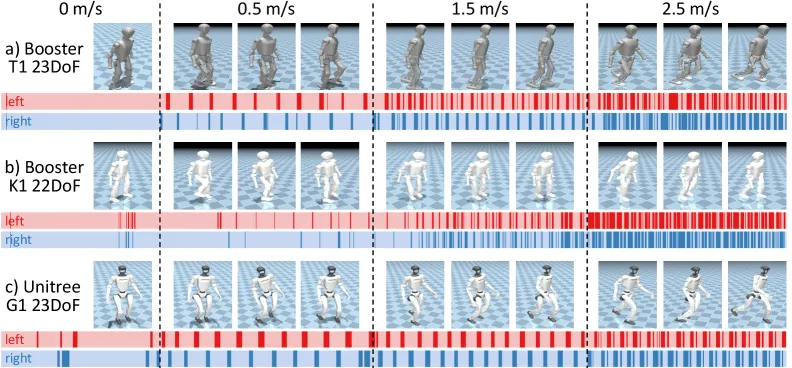
A humanoid that can walk should not relearn locomotion from scratch to jog or run. Yet current approaches often obtain gait diversity by prescribing gait schedules, imitating motion clips, training experts to switch between or distilling skills into one policy. These strategies can produce impressive behaviors, but offer limited flexibility across continuous speed commands, terrains, and morphologies. We study skill growth with GaitSpan, a framework that expands a pretrained, basic walking policy into faster locomotion. It treats walking as a seed skill: reusable motor structure for balance, support, body coordination, and contact transition that can be regenerated at new rhythms, extended into longer/higher strides, and corrected by residual adaptation. This expansion has three aspects: 1) rhythm generation, which modulates the frozen walking policy with multiple internal clocks and learns command-conditioned combinations of the resulting canonical actions; 2) stride shaping, which rewards dynamic locomotion patterns appropriate for higher commanded speeds using a physically grounded objective inspired by spring-loaded inverted pendulum dynamics; and 3) residual adaptation, which captures motion details not accounted for by rhythm generation or stride shaping. GaitSpan is the first to deliver a single command-conditioned humanoid policy that spans walking, jogging, and running-like regimes covering a continuous speed range, transfers across morphologies, and deploys zero-shot on unseen sim-to-sim, and real-world terrains. Compared with baselines either trained with multi-experts or imitation from humans, it learns faster and achieves stronger gait performance.

HumanoidGait
Kwan-Yee Lin, Zilin Wang, Janelle J. Liu · 421 views · Jul 13, 2026
Expert Behavior Prior Reinforcement Learning

Expert Behavior Prior Reinforcement Learning

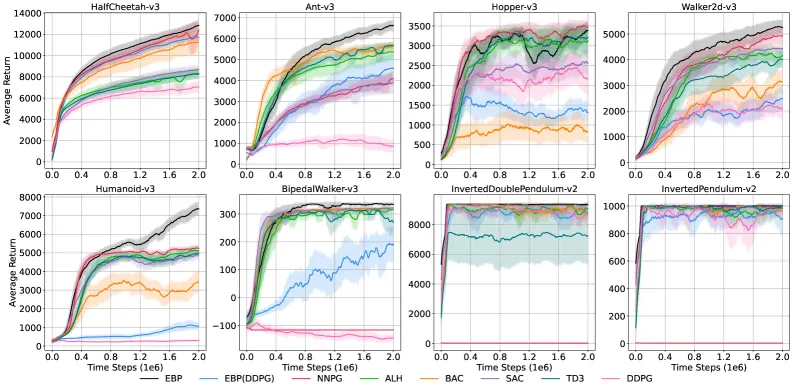
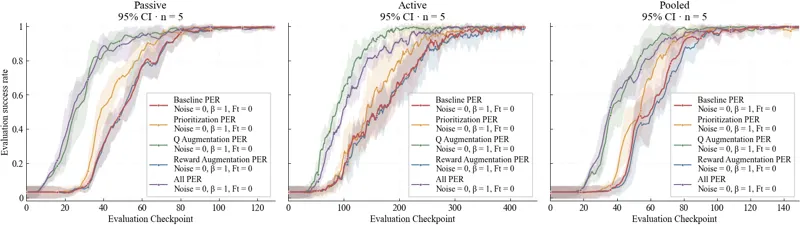
Behavior prior reinforcement learning (BPRL) has emerged as a promising paradigm to improve sample efficiency in online reinforcement learning (RL) by leveraging policy priors derived from offline demonstrations. However, most existing BPRL methods rely on static offline datasets, which often suffer from low data diversity and suboptimal trajectory quality. This reliance restricts the effectiveness of policy priors, hindering both policy exploitation and stability during online training. Consequently, agents are prone to inefficient exploration and unstable learning dynamics. To address these limitations, we deviate from existing offline pre-training methods and propose an Expert Behavior Prior (EBP) algorithm. Specifically, we introduce a Q-guided conditional variational autoencoder (Q-CVAE) that learns to generate expert policy priors directly from the online replay buffer. This enables the generation of high-value actions for guiding policy updates without relying on pre-collected expert trajectories. To further enhance policy exploitation, we propose an expert policy guidance (EPG) mechanism that selects expert actions from a generative support set, and we integrate a policy gradient correction (PGC) module to harmonize Q-guidance with expert supervision, promoting stable and consistent policy improvement. Extensive experiments conducted on robotic control (Gym, PyBullet) and industrial control (DMControl) benchmarks demonstrate that EBP significantly outperforms state-of-the-art online RL algorithms, achieving higher sample efficiency and more stable convergence.

Reinforcement Learning
Gong Gao, Weidong Zhao, Xianhui Liu · 255 views · Jul 23, 2026
A Replay-Constrained Simulation Framework for Personalization of Powered Knee–Ankle Prosthesis Controllers

A Replay-Constrained Simulation Framework for Personalization of Powered Knee–Ankle Prosthesis Controllers

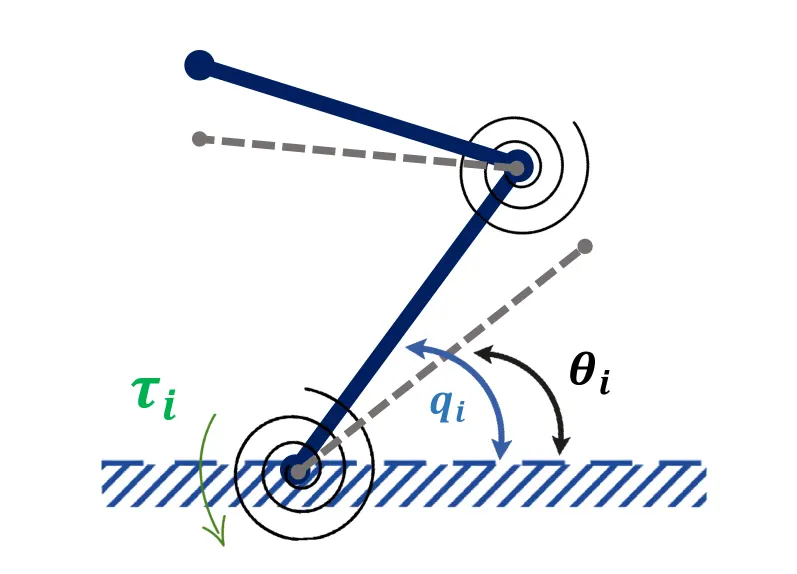
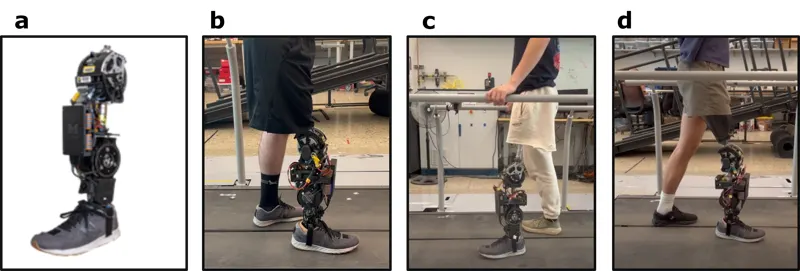
Personalization of impedance controllers for powered prosthetic legs is critical to accommodating individual gait biomechanics but remains challenging. Existing methods rely on time-intensive human-in-the-loop exploration and/or constrain optimization to low-dimensional, single-joint parameter subspaces. Sim-to-real transfer has enabled high-dimensional locomotion control for legged robots, but in assistive device control the human partner remains un-modelable. We present a replay-constrained simulation framework: a MuJoCo-based simulator reproduces prosthetic knee-ankle dynamics while replaying recorded hip kinematics and feedback-based ground reaction forces from individual walking data, bypassing the need to model complex human neuromuscular control mechanisms. We demonstrate the framework with a deep reinforcement learning policy that personalizes phase-dependent stiffness, damping, and equilibrium angle at both joints simultaneously, maximizing a biomimicry-based reward computed solely from onboard prosthesis measurements. Experiments with three participants with transfemoral amputation during level-ground walking at 0.8 m/s demonstrate strong simulation-to-hardware predictive validity (Pearson r=0.96–$0.997$). The best-performing policy on hardware was consistently predicted within the top five simulation policies for all participants. The learned controllers improved overall biomimicry rewards by 42–59% relative to the unpersonalized baseline. The framework supports scalable high-dimensional personalization of powered prosthetic legs and is amenable to extension to higher-dimensional controller parameterizations such as neural-network controllers.

Reinforcement Learning
Duong Le, Ryan Posh, Shihao Cheng · 272 views · Jul 24, 2026
LEACL: LLM-Enhanced Automatic Curriculum Learning for Reinforcement Learning in Long-Horizon Manipulation Tasks

LEACL: LLM-Enhanced Automatic Curriculum Learning for Reinforcement Learning in Long-Horizon Manipulation Tasks

Long-horizon manipulation tasks pose significant challenges for reinforcement learning due to sparse reward signals and long horizons. Automatic curriculum learning (ACL) has been proposed to tackle these challenges by progressively training agents on a sequence of tasks, from easier to more difficult. However, the success of ACL depends heavily on task-dependent specifications-such as well-defined task parameter spaces and difficulty measures-which are often manually crafted and difficult to generalize across diverse tasks. Recent advances in large language models (LLMs) offer a promising alternative by enabling the decomposition of complex tasks into meaningful subtasks using the LLMs' web-scale common-sense knowledge. This decomposition can provide a natural curriculum structure for efficient learning of long-horizon tasks. However, existing LLM-based methods typically rely on hand-designed dense reward functions to learn each subtask, which can introduce bias and still requires significant human supervision. In this work, we propose LLM-enhanced automatic curriculum learning (LEACL), a framework that integrates LLMs and ACL to address these limitations. Specifically, LLMs are used to both decompose tasks into subtasks and to generate task-dependent specifications for each subtask. These specifications are then used by ACL algorithms to guide learning using only sparse reward signals, eliminating the need for dense reward design. We evaluate LEACL on five long-horizon manipulation tasks from the LIBERO benchmark. LEACL achieves better asymptotic performance in terms of the success rates compared to human-designed dense rewards.

Reinforcement Learning
Faraz Heravi, James Ouyang, Zifan Xu · 283 views · Jul 26, 2026
PRISM: Polynomial Representations for Interaction-Structured Motor Control

PRISM: Polynomial Representations for Interaction-Structured Motor Control

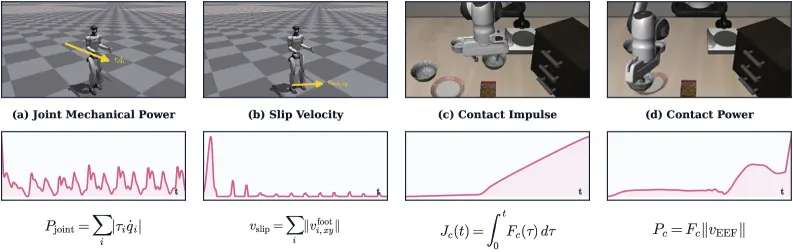
Robot policies are typically MLPs mapping observations to actions. Yet robot observations are physical variables, and many action-relevant cues arise not from individual variables but from their interactions; power, inertial effects, contact, slip, and compliance depend on products among observable signals. We introduce PRISM, a policy representation that makes polynomial interactions among observable physical variables explicit, learnable, and compact. Rather than listing all polynomial terms, PRISM uses a factorized polynomial module to expose higher-order interaction features efficiently. In reinforcement learning, it keeps the standard MLP backbone but applies a gradually activated element-wise polynomial function after it. In imitation learning, it replaces linear proprioceptive conditioning in Diffusion Policy with a polynomial layer trained end-to-end. Across humanoid locomotion and contact-rich manipulation, PRISM improves performance over standard MLP policies and larger MLPs with matched capacity, showing that interaction structure cannot be replaced by capacity alone. It also yields sensorless compliant behavior without force, wrench, tactile input, contact labels, or admittance control. These results suggest that polynomial representations should become a standard architectural choice for embodied motor control. The project page is available at https://lsh3163.github.io/prism/

PrismMotion Control
Seung Hyun Lee, Stella X. Yu · 453 views · Jul 26, 2026

As an Amazon Associate, we earn from qualifying purchases.